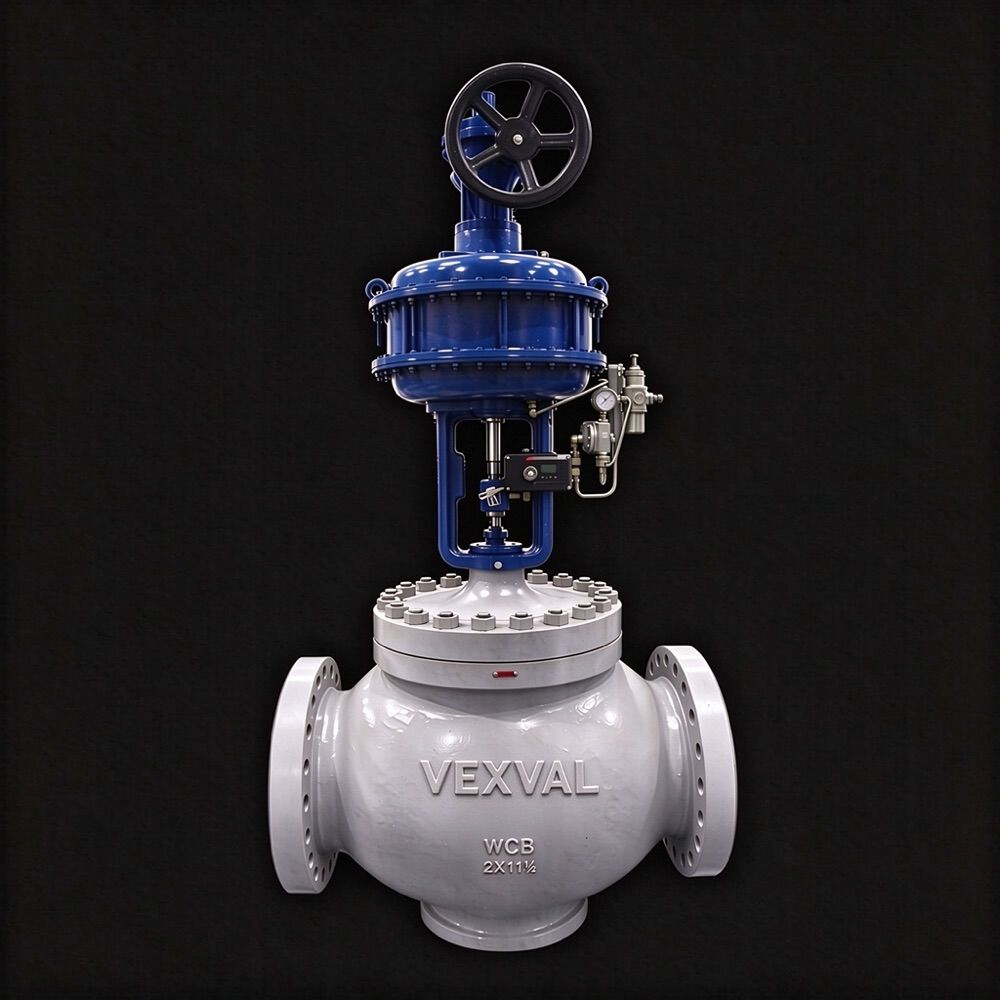
Control Valves & Safety Valves
Cage-Guided Control Valve
Price:Quoted by size, pressure rating, body material and configuration
- Size rangeDN25 – DN300 (1″ – 12″)
- Pressure classASME Class 150 – 600 (PN 20 – PN 100)
- Body materialWCB / WC6 / CF8M
- Plug / cage316 stainless steel + hardening / multi-stage pressure-reduction cage
Our Products
The Cage-Guided Control Valve uses a cage design in which the plug is guided up and down inside the cage. The long guiding surface gives good stability and strong vibration resistance, and the cage windows can be configured to change the flow characteristic and the number of pressure-reduction stages.
Multi-stage pressure-reduction cages effectively suppress cavitation and flashing and reduce noise, making the valve suitable for high differential pressure, cavitation-prone and noise-sensitive duties. The cage can be replaced as a complete unit to change the Cv value and flow characteristic, which simplifies maintenance; it is one of the most widely used control valve designs in the process industry.
Features
· Cage-guided design, good stability and strong vibration resistance
· Multi-stage pressure-reduction cage resists cavitation and flashing and reduces noise
· Cage replaceable as a complete unit to change Cv and flow characteristic
· Equal-percentage / linear characteristics available
· Leakage class FCI 70-2 Class IV/V
· Pneumatic / electric actuator options
Technical Specifications
Size range
DN25 – DN300 (1″ – 12″)
Pressure class
ASME Class 150 – 600 (PN 20 – PN 100)
Body material
WCB / WC6 / CF8M
Plug / cage
316 stainless steel + hardening / multi-stage pressure-reduction cage
Flow characteristic
Equal percentage / linear
Leakage class
FCI 70-2 Class IV / V
End connection
RF flange
Temperature range
−29 to +538 °C (depending on material)
Design standard
IEC 60534 / GB/T 17213
Actuator
Pneumatic diaphragm / piston / electric
Applications
For flow and pressure control in chemical, refining and power plant lines with high differential pressure, cavitation risk and noise requirements, especially where high control stability is required.