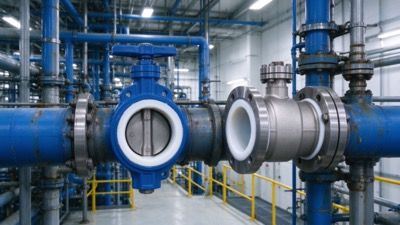
Valve Solutions for Chemical & Fine Chemical
Valve packages for chlor-alkali, soda ash, phosphate fertiliser, pesticide/dye and polymerisation plants: fluorine-lined and lined butterfly valves, ball valves and diaphragm valves, with corrosion-resistant materials matched to aggressive media.
Application Scenarios
The core of chemical and fine chemical duty is aggressive corrosion: chlorine, caustic soda, hydrochloric acid, sulphuric acid, phosphoric acid, ammonium carbamate and organic solvents attack metals and seals significantly; pressure classes are mostly Class 150–900 and temperatures concentrate in the −20–200 °C range; some media carry solids, crystallise easily or are toxic and flammable, so seal and material matching requirements are strict.
Typical units include chlor-alkali electrolysis and chlorine lines, soda ash ammonia-salt and calcination, phosphate fertiliser reaction tanks and phosphogypsum, pesticide/dye reactors and solvent recovery, and coating resin polymerisation kettles and monomer lines.
Solution Configuration
1. Operating Conditions: The main challenge in chemical valves is aggressive corrosion and media diversity. Chlorine and caustic soda in chlor-alkali, phosphoric acid and phosphogypsum in phosphate fertiliser, and monomers and solvents in polymerisation plants attack bodies, trim and seals; some media carry solids, crystallise or polymerise and foul; toxic and flammable media demand reliable external sealing. The wrong material leads to pitting perforation, lining blistering and detachment or seal failure — the typical failure modes of chemical valves.
2. Recommended Valve Types: Chlor-alkali and acid/alkali lines use fluorine-lined (PFA/F46/PTFE) butterfly valves, ball valves and diaphragm valves; phosphoric acid reactors and phosphogypsum use lined butterfly valves and wear-resistant valves; reactors and solvent recovery use lined ball valves and diaphragm valves; polymerisation kettles and monomer lines use fully lined valves and UPVC/CPVC/PP valves; electrolysers and severely corrosive locations use rubber-lined valves; where control is needed, lined eccentric butterfly valves or V-port ball valves are used.
3. Selection Points: Lining material is chosen by concentration and temperature (PTFE suits higher temperatures, PFA/F46 has lower permeability); toxic media favour diaphragm valves to avoid packing leakage; solids-laden or crystallising media require full bore or cavity-free designs; chlorine service avoids pitting of standard stainless steel, using duplex or non-metallic lining instead; the bond quality between lining and body must be verified.
4. Materials and Trim: Bodies can be grey or ductile iron with PFA/F46/PTFE lining, CF8M, CF3M/316L, duplex F51 and alloy 20/Hastelloy/Ti; diaphragms and seals are PTFE/EPDM/Viton; trim can be hardfaced with carbide for solids-laden erosion.
5. Standards and Certification: Design follows API 609, API 608, EN 593, ASME B16.34 and ISO 5208; export requires CE/PED 2014/68/EU; FDA-grade lining requirements can be supported for adjacent food and pharmaceutical applications.
6. Delivery and Documentation: 3.1 material certificates, lining quality records (spark test, adhesion) and pressure test reports are provided; small-batch and non-standard customisation are supported to meet the multi-product needs of fine chemicals.
Solution Value
- Fluorine-lined options: PFA/F46/PTFE-lined butterfly and ball valves withstand strong acids, alkalis and organic solvents
- No external leakage: diaphragm valves isolate media from the mechanism, suited to toxic media
- Anti-clog and anti-crystallisation: full bore and cavity-free designs reduce deposition and blockage with solids
- Material matching: CF8M/CF3M, duplex, alloy 20/Hastelloy/Ti selected by concentration and temperature
- Inspectable lining: spark pinhole and adhesion testing, with pH checks and documentation to guarantee lining quality
Implementation Process
Inquiry & Valve Selection
Share the medium, pressure rating, temperature and end connection; we recommend the valve type and body material.
Quotation & Technical Clarification
A formal quotation with datasheet is issued within 24 hours; drawings and design standards are clarified.
Production & Inspection
Body material, sealing and dimensions are controlled; every valve is pressure tested before dispatch.
Documents & Shipment
EN 10204 material certificate, test report and export documents are provided with the shipment.
After-sales Support
Spare parts, remote technical support and worldwide replacement service.