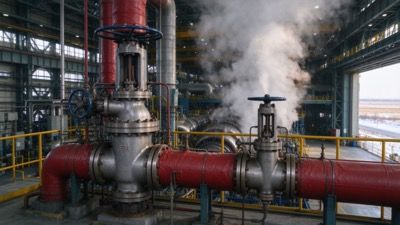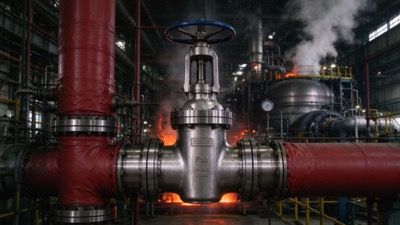
Valve Solutions for Power Generation
Valve packages for main steam and boiler feedwater in coal-fired (ultra-supercritical) plants: WC9/F91 main steam gate valves, minimum-flow feed pump control valves and HP heater three-way valves, addressing cavitation, water hammer and thermal fatigue.
Application Scenarios
Power plant valves centre on high-parameter steam and feedwater systems: main and reheat steam reach the 600 °C class at Class 1500–2500; boiler feedwater has high flow and high differential pressure; start-stop and load-following operation bring frequent thermal cycles and a high risk of thermal fatigue and seat failure. FGD and ash handling systems carry solids and tend to scale and wear.
Typical applications include coal-fired (ultra-supercritical) boiler and turbine systems, nuclear conventional and nuclear islands, hydro inlet valves, gas turbine/combined cycle HRSG, and flue gas desulphurisation and steam systems in waste-to-energy and biomass plants.
Solution Configuration
1. Operating Conditions: Power plant valves must handle the high temperature and pressure of high-parameter steam, frequent start-stop thermal cycling and the cavitation risk of large-differential-pressure feedwater. Main and reheat steam are hot and at high pressure (Class 1500–2500), with high-temperature creep and thermal fatigue dominating; feed pump minimum-flow and recirculation loops have very large differential pressure, and the vena contracta can fall below vapour pressure, causing cavitation with noise and vibration; FGD slurry carries solids and scales and wears noticeably.
2. Recommended Valve Types: Main and reheat steam systems use WC9 (F22)/F91 (C12) high-temperature gate valves with parallel double-disc construction that accommodates thermal expansion; feed pump minimum flow and recirculation use multi-stage cage-guided control valves for cavitation resistance; three-way valves serve HP heater bypass switching; nuclear conventional and nuclear islands use nuclear-grade gate, check and ball valves (ASME QME-1); FGD uses butterfly valves and slurry valves; gas turbine/combined cycle uses high-temperature bypass valves and HRSG high-temperature valves.
3. Selection Points: Material and bonnet type follow steam parameters (pressure-seal bonnets preferred for high temperature and pressure); minimum-flow control valves require checks of cavitation margin and stage count, with noise taken into account; check valve closing speed is chosen from line characteristics to prevent water hammer; actuators require stroke-time and fail-safe position checks; large butterfly valves require torque verification.
4. Materials and Trim: Bodies use A217 WC6/WC9/C12 (F11/F22/F91) and CF8M; Trim 5 (Stellite 6 overlay) resists high-temperature erosion; packing is flexible graphite with live loading to suit thermal cycling; bolting is B16/B7A by temperature.
5. Standards and Certification: Design follows API 600, BS 1873, ASME B16.34, API 598, API 607 fire safety and ISO 15848 low fugitive emissions; nuclear-grade products follow ASME QME-1 and the relevant nuclear safety codes; export requires CE/PED.
6. Delivery and Documentation: EN 10204 3.1/3.2 material certificates, high-temperature and shell/seat test reports, ITP and third-party witness are provided; power projects usually require document approval and witness points to be agreed in advance.
Solution Value
- High-temperature main steam valves: WC9/F91 bodies with pressure-seal bonnets for stable 600 °C class steam duty
- Cavitation-resistant control: multi-stage cage trim in feed pump minimum-flow valves suppresses cavitation and high noise
- Water-hammer protection: lift, tilting-disc or axial flow check valves with spring damping reduce fast-closure surge
- Thermal-fatigue tolerance: parallel double-disc construction accommodates thermal expansion and limits high-temperature seizure
- Complete certification: ASME QME-1 (nuclear), CE/PED and third-party witness arranged to project requirements
Implementation Process
Inquiry & Valve Selection
Share the medium, pressure rating, temperature and end connection; we recommend the valve type and body material.
Quotation & Technical Clarification
A formal quotation with datasheet is issued within 24 hours; drawings and design standards are clarified.
Production & Inspection
Body material, sealing and dimensions are controlled; every valve is pressure tested before dispatch.
Documents & Shipment
EN 10204 material certificate, test report and export documents are provided with the shipment.
After-sales Support
Spare parts, remote technical support and worldwide replacement service.