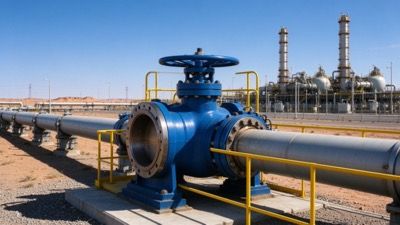
Valve Solutions for Oil & Gas
A full-chain valve package for oil and gas wellheads, gathering stations, long-distance pipelines and gas storage: API 6D fully welded and trunnion-mounted ball valves, pig launcher/receiver valves, ESD emergency shutdown valves and NACE sour-service valves for sour and high-pressure transmission duty.
Application Scenarios
Oil and gas valve service spans upstream wellheads, midstream transmission and downstream storage and transport: pressure classes Class 150–2500 (PN20–PN420), with API 6A wellhead duty reaching 10,000–20,000 psi; media include crude oil, natural gas, condensate, sour gas (H₂S) and produced water; the main hazards are flammability and explosiveness, sulphide-induced embrittlement (sour service) and high-velocity erosion.
Typical installations include wellhead Christmas trees, gathering stations and three-phase separators, mainline valve stations and pigging stations, compressor stations, metering skids, gas storage, and crude/product tank farms with truck and ship loading arms.
Solution Configuration
1. Operating Conditions: Oil and gas valves must handle high pressure, sour service, flammability and severe erosion at the same time. Upstream wellheads combine high pressure, sand and sulphur content and wide temperature swings; midstream transmission lines are large diameter (DN300–DN1200 and above), mostly Class 600–900, and require buried maintenance-free operation with in-line pigging; downstream tank farms and loading arms demand zero leakage and fire safety (API 607 / API 6FA). Sour service requires material selection to NACE MR0175 / ISO 15156 to avoid hydrogen-induced cracking (HIC) and sulphide stress cracking (SSC).
2. Recommended Valve Types: For midstream mainline valve stations and compressor stations, API 6D trunnion-mounted ball valves and fully welded ball valves in full bore allow pig passage; pigging stations use pig launcher/receiver valves; station inlet/outlet and vent systems use ESD emergency shutdown valves with gas-over-oil or electric actuators to meet SIL (IEC 61508/61511) functional safety requirements; pump stations and metering skids use axial flow check valves or dual-plate check valves with spring damping to reduce water hammer; upstream gathering and wellheads use NACE sour-service gate valves, API 6A wellhead valves and chokes.
3. Selection Points: The bore type follows the medium — pigging sections must be full bore; material selection depends on sour service and must be verified for NACE compliance; Class 900 and above with high-pressure flammable media should use RTJ (ring joint) facings; buried pipelines should use fully welded bodies with external coating; ESD loops require verification of closing time, fire-safe design and fail position (FC/FO); large-diameter transmission valves require torque and actuator sizing review.
4. Materials and Trim: Bodies are typically WCB/WCC cast steel or A105/A350 LF2 forged steel; sour and corrosive duty uses CF8M, duplex (F51/2205) or nickel-based alloys; low-temperature sections use LCC/LC3. Sealing surfaces follow API 600 trim numbers with 13Cr (Trim 1) or Stellite 6 overlay (Trim 5), with carbide hardfacing at high-erosion areas; PTFE/PEEK soft seats are used where zero leakage (ISO 5208 Rate A) is required. Bolting is A193 B7/B7M with A194 2H/2HM.
5. Standards and Certification: Design and testing follow API 6D / ISO 14313, API 6A, API 598, API 607 / 6FA fire safety and ISO 15848 low fugitive emissions; pressure-temperature ratings follow ASME B16.34; sour materials follow NACE MR0175 / ISO 15156; market access requires API Monogram and CE/PED 2014/68/EU, and EAC / TR CU 010 for the Russian-speaking region.
6. Delivery and Documentation: EN 10204 3.1/3.2 material certificates, shell test (1.5× rated) and seat test (1.1×) reports, ITP inspection and test plans and third-party witness options are supplied with each order; OEM private labelling, nameplates and custom packaging are available.
Solution Value
- Full bore API 6D ball valves: pigs pass freely, meeting in-line pigging and ILI requirements on transmission pipelines
- Fully welded body: no external leak paths, suited to buried maintenance-free duty and cold or highly humid environments
- Sour-service materials: NACE MR0175 / ISO 15156 compliant materials and B7M/2HM bolts to resist H₂S stress corrosion
- ESD emergency shutdown: gas-over-oil or electric actuators with SIL loops, integrated with SCADA for remote emergency isolation
- Traceable documentation: API 6D/6A monogram, EN 10204 3.1/3.2 material certificates and third-party inspection (SGS/BV/TÜV)
Implementation Process
Inquiry & Valve Selection
Share the medium, pressure rating, temperature and end connection; we recommend the valve type and body material.
Quotation & Technical Clarification
A formal quotation with datasheet is issued within 24 hours; drawings and design standards are clarified.
Production & Inspection
Body material, sealing and dimensions are controlled; every valve is pressure tested before dispatch.
Documents & Shipment
EN 10204 material certificate, test report and export documents are provided with the shipment.
After-sales Support
Spare parts, remote technical support and worldwide replacement service.
Related Valves
Related Projects

API 6D Ball Valve Delivery for a Middle East Refinery Project
The project covered the packaged delivery of API 6D trunnion-mounted ball valves and associated valves for a refinery expansion in the Middle East, across critical points including tank farm isolation, process line isolation and truck and tanker loading arms.
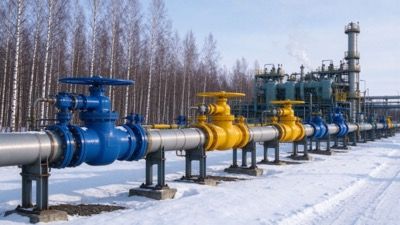
Gathering Pipeline Valve Replacement in the Russian-Speaking Region
The project supplied valve replacements and spare parts to a gathering station in the Russian-speaking region, replacing failed ball valves and gate valves to restore station shutoff and sealing performance.