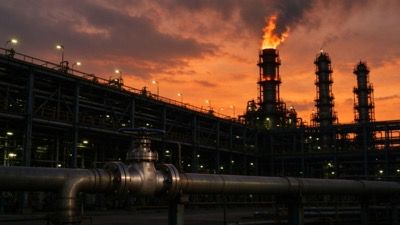
Valve Solutions for Petrochemical & Refining
Valve packages for crude distillation, FCC, hydrocracking and coking units: F11/F22/F91 high-temperature gate and globe valves, high-pressure hydrogen-service valves and DBB ball valves, addressing high temperature, high pressure, hydrogen and high-alloy requirements.
Application Scenarios
The core challenge in refining and petrochemical plants is high temperature and pressure combined with hydrogen and high-alloy materials: crude and vacuum tower bottoms and furnace outlets run at 350–550 °C; hydrocracking (HCU) units operate at high temperature and pressure in hydrogen service, where high H₂ partial pressure promotes hydrogen embrittlement and hydrogen attack; FCC reaction-regeneration systems carry catalyst particle erosion; pressure classes are Class 300–2500. Most media are flammable, toxic and contain hydrogen sulphide, so risk, unit value and project scale are all high.
Typical units include crude and vacuum distillation, FCC, hydrocracking, CCR reforming, delayed coking, ethylene cracking and PTA/aromatics plants, plus tank farms and flare systems.
Solution Configuration
1. Operating Conditions: Refining valves operate continuously under high temperature and pressure, hydrogen and sulphur. Crude and vacuum units and furnace outlets are dominated by high-temperature creep; FCC flue gas and slurry carry catalyst particles with severe abrasion and erosion; hydrocracking units have high hydrogen partial pressure and require protection against hydrogen embrittlement, hydrogen attack and temper embrittlement; reforming and coking involve thermal cycling and fouling. Design temperature and medium determine material selection — the wrong choice leads to internal leakage, stem seizure or corrosion perforation.
2. Recommended Valve Types: Crude and vacuum tower bottoms, side draws and furnace outlets use F11/F22/F91 high-temperature gate and globe valves, with pressure-seal bonnets preferred for high-temperature steam and high-pressure locations; FCC uses high-temperature wear-resistant gate valves, orbit ball valves and slide valves; hydrocracker reactor inlet/outlet, recycle hydrogen compressors and high-pressure exchangers use high-pressure hydrogen-service globe and ball valves, DBB valves and API 602/623 forged valves; reforming uses high-throughput valves and high-temperature ball valves; delayed coking uses four-way valves and high-temperature wear-resistant gate valves; ethylene cracking uses ultra-high-temperature gate valves and cryogenic ball valves; PTA/aromatics use titanium, duplex or lined valves.
3. Selection Points: Materials are selected by design temperature with a safety margin (F11 up to 538 °C, F22 up to 593 °C, F91 up to 650 °C); hydrogen service is assessed against the Nelson curve and API 941; high differential pressure liquids are checked for cavitation with ΔP ≥ FL²(P1−Pv), with multi-stage trim where needed; frequent operation and high-temperature locations use metal seats; sour locations require NACE compliance checks.
4. Materials and Trim: Bodies use A217 WC6/WC9/C12 (equivalent to F11/F22/F91), CF8M stainless and duplex; trim uses Trim 5 (Stellite 6 overlay at 38–44 HRC with a 13Cr stem) for temperature and wear resistance; sealing surfaces are hardfaced; bolting is selected by temperature from A193 B7/B16/B8M. Packing is flexible graphite or live-loaded, with an anti-blowout stem.
5. Standards and Certification: Design follows API 600 / 602 / 603 / 623, API 6D, API 598, ASME B16.34, API 607 fire safety and ISO 15848 low fugitive emissions; sour and hydrogen service follows NACE MR0175 / ISO 15156 and API 941; export requires CE/PED 2014/68/EU.
6. Delivery and Documentation: EN 10204 3.1/3.2 material certificates, PMI spectro verification, NDT reports, shell and seat test reports and ITP are provided; refining projects usually require third-party witness (LR/DNV/TÜV/SGS/BV), which we can arrange.
Solution Value
- High-temperature materials: F11 (WC6), F22 (WC9) and F91 (C12) matched to design temperature for stable creep performance
- Hydrogen-service compliance: hydrogen partial pressure and temperature checked against the Nelson curve, with high-alloy or stainless steel against hydrogen embrittlement and attack
- Erosion resistance: Trim 5 (Stellite 6 overlay) with streamlined flow paths to extend life in catalyst-laden duty
- Zero-leakage options: DBB double block and bleed and metal seats, with pressure-seal bonnets for high pressure
- Verifiable documentation: PMI spectro analysis, NDT (RT/UT/MT/PT) and EN 10204 3.1/3.2 supplied with the order
Implementation Process
Inquiry & Valve Selection
Share the medium, pressure rating, temperature and end connection; we recommend the valve type and body material.
Quotation & Technical Clarification
A formal quotation with datasheet is issued within 24 hours; drawings and design standards are clarified.
Production & Inspection
Body material, sealing and dimensions are controlled; every valve is pressure tested before dispatch.
Documents & Shipment
EN 10204 material certificate, test report and export documents are provided with the shipment.
After-sales Support
Spare parts, remote technical support and worldwide replacement service.
Related Valves
Related Projects
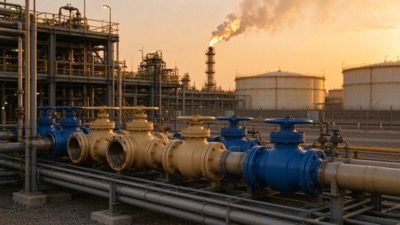
API 6D Ball Valve Delivery for a Middle East Refinery Project
The project covered the packaged delivery of API 6D trunnion-mounted ball valves and associated valves for a refinery expansion in the Middle East, across critical points including tank farm isolation, process line isolation and truck and tanker loading arms.
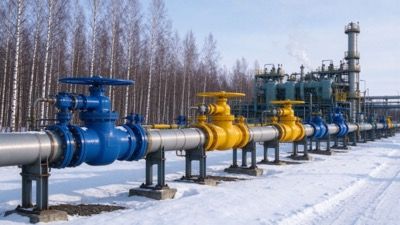
Gathering Pipeline Valve Replacement in the Russian-Speaking Region
The project supplied valve replacements and spare parts to a gathering station in the Russian-speaking region, replacing failed ball valves and gate valves to restore station shutoff and sealing performance.